0
0
0
0
0
0
0
0
0
0
0
0
0
0
0
0
0
0
 0
0
 0
0
 0
0
 0
0
 0
0
 0
0
 0
0
 0
0
 0
0
 0
0
 0
0
 0
0
0
0
0
0
0
0
Cables with connectors
Despite the fact that all cables look similar to each other, there is still a difference between them, and a very big one at that. The effect of a cable on sound depends on many factors: cable length, cross-section of conductors, shielding, connector material, cable connection direction, manufacturing technology, etc.
The shorter the cable length, the better for the sound. The impedance of the cable has a very large effect on the sound, especially on the bass component (low frequencies). The most vulnerable cable in which the resistance has the greatest effect on the sound is the speaker cable. The conductor material of the cable is also important to the sound. Some manufacturers use alloys of silver, gold, palladium and platinum in various combinations to improve signal transmission.
The main purpose of a cable is to carry an electrical signal from one component to another without significantly degrading the signal or creating noise. The varieties are seemingly endless, and the specifications and features can be confusing.
The main types of cables
In terms of function, there are four basic types of cables:
- Instrumental cables
- Patch cables
- Microphone cables
- Acoustic cables
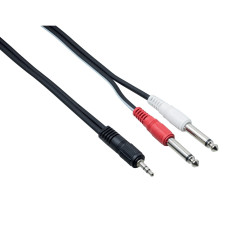
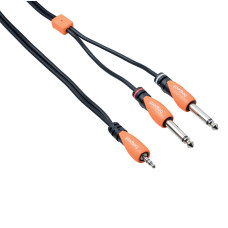
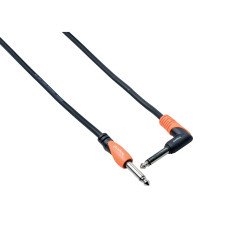
An instrumental cable connects a guitar, piano, or other electronic instrument to an amplifier or preamp designed to connect the instrument directly. Instrument cables are designed to carry low-voltage instrument signals and most commonly have 1/4" connectors. The term "patch cable" generally describes any cable that connects various components together. They are often short in length and can be used to connect equipment or to connect effect pedals to each other in a signal chain. Depending on their purpose, they may have balanced or unbalanced conductors and a variety of connectors, including XLR, 1/4", TRS, or RCA. Microphone cables are shielded and balanced and usually have an XLR male connector on one end and an XLR female connector on the other. In addition to connecting a microphone to a sound system, microphone cables are often used as long balanced patch cables – for example, to connect a mixing console to powerful speakers. They can also be used to connect DI's between the instrument and the mixing console, as well as for light effects with DMX control capability. An acoustic cable is an unbalanced cable, and usually has a much thicker conductor than a patch, instrument or microphone cable. Acoustic cables require thicker wires because they carry much higher voltage signals. They may have 1/4" connectors, banana clips (also called MDP connectors), jumper pads (usually found on consumer stereo amplifiers), or Speakon connectors.
Balanced and unbalanced cables
Unbalanced cables have a better chance of picking up radio noise and interference. If you open up an unbalanced cable, you will see two wires: a conductor and a ground wire. Balanced cables, on the other hand, are designed to suppress this interference and electrical hum. They do this with an extra wire inside – two conductor wires and a ground wire. With the second wire, both wires cancel out the interference. Knowing the difference between balanced and unbalanced cables is critical to choosing the right cables for each situation. This will avoid unpleasant signal loss or rough noise interference in your recordings or live performances. The wrong cable can even damage your devices.
Analog and digital audio cables
What's the difference between analog and digital audio cables? They both transmit audio information, the only difference is that analog cables transmit electrical audio signals and digital cables transmit digital information in binary code (zeros and ones, the language that computers speak).
Analog cables
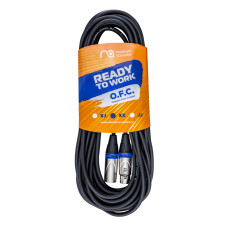
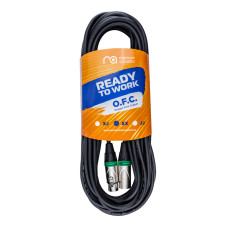
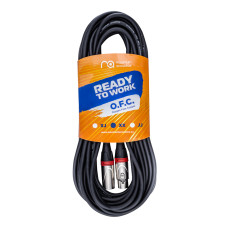
XLR cables are always balanced cables. They snap together – so you will not disconnect them by mistake if you pull on them. XLR cables can be very long and have no noise interference. These cables are used for connecting: microphones, active speakers, hands-free systems, and for instruments that have XLR connectors.
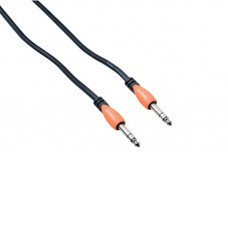
TRS (Tip-Ring-Sleeve) cables are cables with connectors that have three wires inside (two conductors and one ground wire). They are easily identified by the two rubber bands on the connector. TRS cables can be either balanced or unbalanced.
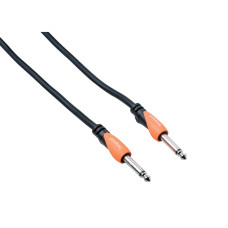
TS (Tip-Sleeve) cables are always unbalanced because they contain two wires: one conductor and one ground. They have one rubber strip on the plug. TS cables are also monaural. They are useful for equipment that has a mono output: guitars, mono effects pedals, some synthesizers and drum machines.
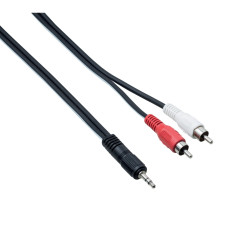
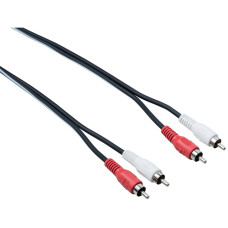
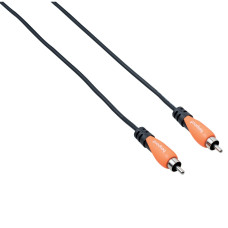
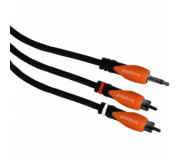
RCA cables are most often connected in pairs to produce stereo sound. The red one is most often used for the right channel and the white one for the left channel. RCA cables are similar to TS cables. Each RCA cable has one conductor and one ground. This means they are always unbalanced.
Speakon cables are used to connect speakers, amplifiers, and monitors to PA systems. They are gaining in popularity over TS and banana type connectors because they are fixed and therefore cannot be accidentally disconnected.
Digital cables
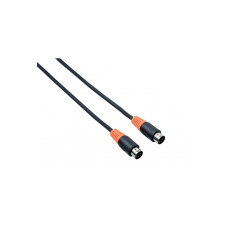
MIDI cables are used to synchronize and transfer commands between devices. MIDI does not create or transmit sound – it transmits event messages. Today, most modern devices have MIDI in, MIDI out, and MIDI thru connectors. Therefore, it is important to keep in mind the flow of the MIDI signal. If the device sends information – you need to connect a cable to the OUT connector; receives information – you need to connect a cable to the IN connector; transfers information to another computer – you need to connect a cable to the THRU connector.
USB cables have become very common in audio production. MIDI keyboards, audio interfaces, modern synthesizers and drum machines have USB connectors. They make it possible to exchange information between musical equipment and computers. USB cables also transmit MIDI information. The most common types of USB instrument cables are USB A-Type (classic flat) and USB B-Type ("square USB"). USB connectors follow the ongoing trend in electronics toward miniaturization. Most new instruments come with their own USB cable.
Digital still includes cables like FireWire, Thunderbolt, and HDMI.
Buy cables in test.musician.ua
Not sure which cable to choose? Our sales consultants will help you choose the right product for you. Online consultation is also possible. You can buy cables in our stores. It is also possible to place an order on our website test.musician.ua. Delivery is carried out all over Ukraine. Thanks to the wide assortment, everyone will be able to choose a product that suits the characteristics and cost. We take care of the quality of service and do everything possible to make sure that you are satisfied with your purchase.