There’s nothing better than the sound of drums to add rhythm and energy to a song, but the process of recording acoustic drums can seem complicated. If you have a limited budget and only a few microphones and a portable audio interface, it might feel out of reach. But in this post, we’ll show you how to get an incredible drum sound using just 1, 2, 3, or even 4 microphones.
Recording Drums with Just 1 Microphone
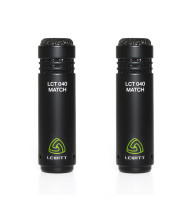
The first setup includes a small diaphragm condenser microphone — LCT 040 MATCH, placed about 30cm above the drummer’s right shoulder and pointed at the right edge of the snare drum.

The idea is to capture a good balance of all the drums — high tom, low tom, kick, and snare. It’s also important to pay attention to how hard you hit the cymbals when recording with just one microphone, as they can easily overpower the sound if hit too hard.
Here’s an example of how this setup sounds.
Recording Drums with 2 Microphones
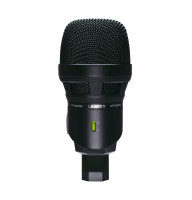
Of course, you can get a great sound with just one microphone, but if you have an extra input, we recommend adding a kick drum microphone, such as the DTP 340 REX. It adds extra detail and low-end power to the kick drum, which is an important element in most modern recordings.
One of the microphone placements that always works is to place it directly inside the port hole, facing inward.

Here’s an example of how this setup sounds.
Recording Drums with 3 Microphones
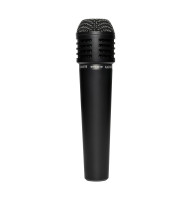
For the 3-microphone setup, add a microphone for the snare drum. The dynamic microphone MTP 440 DM is perfect for adding brightness and energy to the snare drum.
Place the microphone about two fingers above the rim of the snare drum. If you want more volume, point the microphone toward the center of the drum, and if you want more "crack," place it closer to the edge of the drum.

Another thing to pay attention to when recording the snare is the sound from the hi-hat. To minimize the hi-hat bleed into the snare microphone, use the cardioid pattern feature (sound from behind and the sides is not captured) by positioning the microphone at an angle that faces away from the hi-hat as much as possible.
Recording Drums with 4 Microphones
All the techniques described so far are tried-and-true methods for achieving a great, balanced drum sound, but they were all in mono. With the use of 4 microphones, we can add width to the mix. For this, we will use a stereo pair LCT 040 MATCH for the overhead microphones and apply the "Recorder Man" technique.
The setup for this technique is fairly simple. Place the first overhead microphone directly above the center of the snare drum, about a meter up, and place the second overhead microphone above the drummer’s shoulder. Both microphones should be equidistant from the center of the snare drum.

To accurately determine the placement of the second microphone, secure one end of the cable to the bass drum beater and measure the distance to the capsule of the first microphone. Then attach the middle of the cable to the center of the snare drum and rotate it to the position of the microphone above the shoulder, which will give you the distance for the second microphone. This will ensure that the sound from both the bass drum and snare drum reaches both microphones simultaneously, helping avoid phase issues.

In Conclusion
With just one microphone and the use of EQ, you can achieve great drum sounds. But when you add 3 more microphones, you start getting more control, clarity, and stereo width.
However, regardless of how many microphones are in your arsenal, never let that hinder you from creating great music.
Choose products from Lewitt at this link
You can purchase LEWITT products with installment payments of up to 5 installments via Installment Payments from PrivatBank. And as for delivery, don't worry – it's free across Ukraine thanks to Nova Poshta.



Write a comment