
 0
0
 0
0
 0
0
 0
0
 0
0
 0
0
 0
0
 0
0
 0
0
 0
0
0
0
0
0
0
0
 0
0
0
0
 0
0
 0
0
 0
0
 0
0
 0
0
 0
0
0
0
 0
0
 0
0
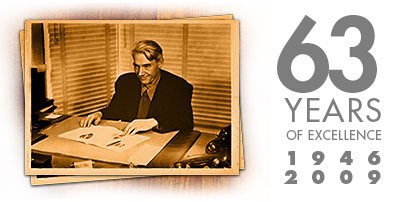
 JBL is an American audio electronics company currently owned by Harman International. It was founded in 1946 by James Bullough Lansing. Their primary products are loudspeakers and associated electronics. There are two independent divisions within the company — JBL Consumer and JBL Professional. The former produces audio equipment for the consumer home market while the latter produces professional equipment for the studio, installed sound, tour sound, portable sound (production and DJ), and cinema markets. James B. Lansing founded JBL one year after leaving Altec Lansing as their Vice President of Engineering in 1945. The company was first called Lansing Sound, Inc., from 1 October 1946, and later changed its name to James B. Lansing Sound. The first products were the model D101 15-inch loudspeaker and the model D175 high-frequency driver. The D175 remained in the JBL catalog through the 1970s. Both of these were near-copies of Altec Lansing products. The first original product was the D130, a 15-inch transducer for which a variant would remain in production for the next 55 years. The D130 featured a four-inch flat ribbon wire voice coil and Alnico V magnet. Two other products were the 12-inch D131 and the 8-inch D208 cone drivers.
 The Marquardt Corporation gave the company early manufacturing space and a modest investment. William H. Thomas, the treasurer of Marquardt Corporation, represented Marquardt on Lansing's Board of Directors. In 1948 Marquardt took over operation of the JBL. In 1949 Marquardt was purchased by General Tire Company. The new company was not interested in the loudspeaker business and severed ties with Lansing. Lansing reincorporated as James B. Lansing, Incorporated, and moved the newly formed company to its first private location on 2439 Fletcher Drive, Los Angeles. A key to JBL's early development was Lansing's close business relationship with its primary supplier of Alnico V magnetic material, Robert Arnold of Arnold Engineering. Arnold Engineering extended favorable terms and deep credit to Lansing. Robert Arnold saw JBL as an opportunity to sell Alnico V magnetic material into a new market. James Lansing was noted as an innovative engineer, but a poor businessman. For the next three years Lansing struggled to pay invoices and ship product. As a result of deteriorating business conditions and personal issues, he committed suicide on September 4, 1949. The company then passed into the hands of Bill Thomas, JBL's then vice-president. Lansing had taken out a $10,000 life insurance policy, naming the company as the beneficiary, a decision that allowed Thomas to continue the company after Lansing's death. Soon after, Thomas purchased Mrs. Lansing's one-third interest in the company and became the sole owner of the company. Thomas is credited with revitalizing the company and spearheading a period of strong growth for the two decades following the founding of JBL.
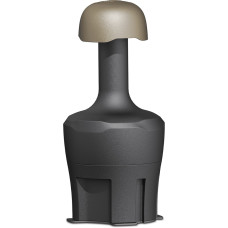
Early products included the model 375 high-frequency driver and the 075 UHF (Ultra High Frequency) ring-radiator driver. The ring-radiator drivers are also known as "JBL bullets" because of their distinctive shape. The 375 was a re-invention of the Western Electric 594 driver but with an Alnico V magnet and a four-inch voice coil. The 375 shared the same basic magnet structure as the D-130 woofer. JBL engineers Ed May and Bart N. Locanthi created these designs.
Two products from that era, the Hartsfield and the Paragon, continue to be highly desired on the collectors' market.
In 1955 the brand name JBL was introduced to resolve ongoing disputes with Altec Lansing Corporation. The company name "James B. Lansing Sound, Incorporated" was retained, but the logo name was changed to JBL with its distinctive exclamation point logo.
The JBL 4320 series studio monitor was introduced through Capitol Records in Hollywood and became the standard monitor worldwide for its parent company, EMI. JBL's introduction to rock and roll music came via the adoption of the D130 loudspeaker by Leo Fender's Fender Guitar company as the ideal driver for electric guitars.
In 1969, Bill Thomas sold JBL to the Jervis Corporation (later renamed Harman International) headed by Dr. Sidney Harman. The 1970s saw JBL become a household brand, starting with the famous L-100, which was the best-selling loudspeaker model of any company to that time. The 1970s also saw a major JBL expansion in the professional audio field from their studio monitors. By 1977, more recording studios were using JBL monitors than all other brands combined, according to a Billboard survey.[4] The JBL L-100 and 4310 control monitors were noteworthy, popular home speakers. In the late 1970s, the new L-series designs L15, L26, L46, L56, L86, L96, L112, L150, and later the L150A and flagship L250 were introduced with improved crossovers, ceramic magnet woofers, updated midrange drivers, and aluminum-deposition phenolic resin tweeters. In the mid 1980s the designs were again updated and redesigned with a new titanium-deposition tweeter diaphragm. The new L-series designations being the L20T, L40T, L60T, L80T, L100T, the Ti-series 18Ti, 120Ti, 240Ti, and the flagship 250Ti. To test speaker drivers, JBL in Glendale and Northridge used the roof as an outdoor equivalent to an anechoic chamber.
Over the next two decades JBL went more mass-market with their consumer (Northridge) line of loudspeakers. At the same time, they made an entry into the high-end market with their project speakers, consisting of the Everest and K2 lines. JBL became a prominent supplier to the tour sound industry, their loudspeakers being employed by touring rock acts and music festivals. JBL products were the basis for the development of THX loudspeaker standard, which resulted in JBL becoming a popular cinema loudspeaker manufacturer.
JBL was formerly used in Ford's top-of-the-line vehicle audio systems, as competition with Chrysler (whose cars used Infinity) and Nissan (who used Bose). Today, Toyota uses JBL systems in its product line-up.